October 2025

Uncategorized

Why Wearing White Shorts in Women’s Soccer Is a Bad Idea

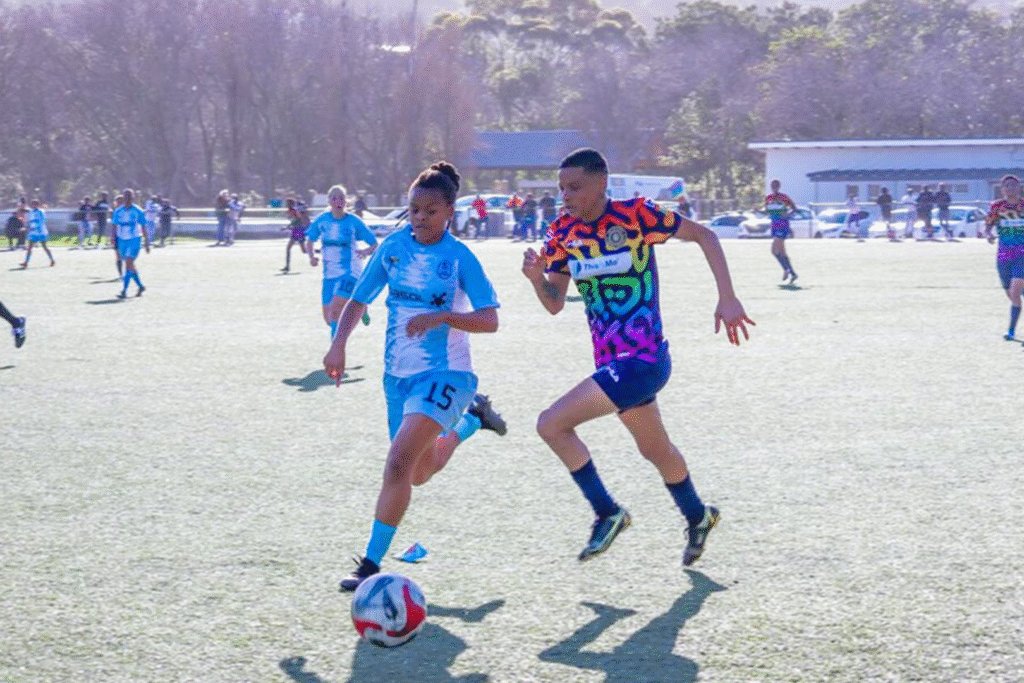
Despite its universality, discussion of the menstrual cycle is still considered taboo in many societies, resulting in a lack of understanding of the associated issues. One such issue is anxiety about leakage, which causes a lack of confidence among women wearing white pants. Previous studies that used semi-structured interviews reported that some female athletes felt uncomfortable playing in white shorts (Pinel et al., 2022), which could distract them from the task at hand (Findlay et al., 2020). If only one player is troubled by wearing white shorts, then the average strength of her team is reduced, giving the opponents an advantage. Teams in white shorts lose more often Recently, I published a study in which I investigated whether wearing white shorts is not only not comfortable but also influences the result of a game. For that, I utilized data from all the games played at the Women’s FIFA World Cups and the UEFA European Championships from 2003 to 2023. In 67.5% of these games, one of the teams played in white shorts. Figure 1 shows that women’s teams that played in white shorts achieved on average 0.3 fewer points per game than did their opponents. (A team winning in 90 or 120 minutes gets three points, a draw is worth one point, and a losing team gets zero points.) Figure 1. Points per game. Teams in white shorts (white bar). Teams in non-white shorts (blue bar). 95% confidence intervals are presented. Source: Krumer, A. (2024). On the cost of wearing white shorts in women’s sport. Journal of Behavioral and Experimental Economics, 110, 102214. One alternative explanation for this result could be that teams in white shorts are simply weaker than their opponents and therefore achieve fewer points per game. However, Figure 2 obviates this concern by showing that teams in white shorts were not only not weaker, but on average even had slightly better FIFA World Rankings than did their opponents who played in non-white shorts. This suggests that the real difference is likely to be even larger than the one shown in Figure 1. Figure 2. FIFA World Rankings. Teams in white shorts (white bar). Teams in non-white shorts (blue bar). 95% confidence intervals are presented. Source: Krumer, A. (2024). On the cost of wearing white shorts in women’s sport. Journal of Behavioral and Experimental Economics, 110, 102214. In addition, I conducted a similar analysis for all the games from the Men’s FIFA World Cups and the UEFA European Championships from 2002 to 2022; in 73% of those games one team played in white shorts. As expected, I found no difference in the number of points per game between the teams in white and non-white shorts. In fact, the null finding in men’s soccer along with a significant effect in women’s soccer support the notion that the mechanism of the negative effect among women likely relates to leakage anxiety, as such anxiety is well documented among women, but for obvious reasons, not among men.
Uncategorized

The Rise of Women’s Football in South Africa

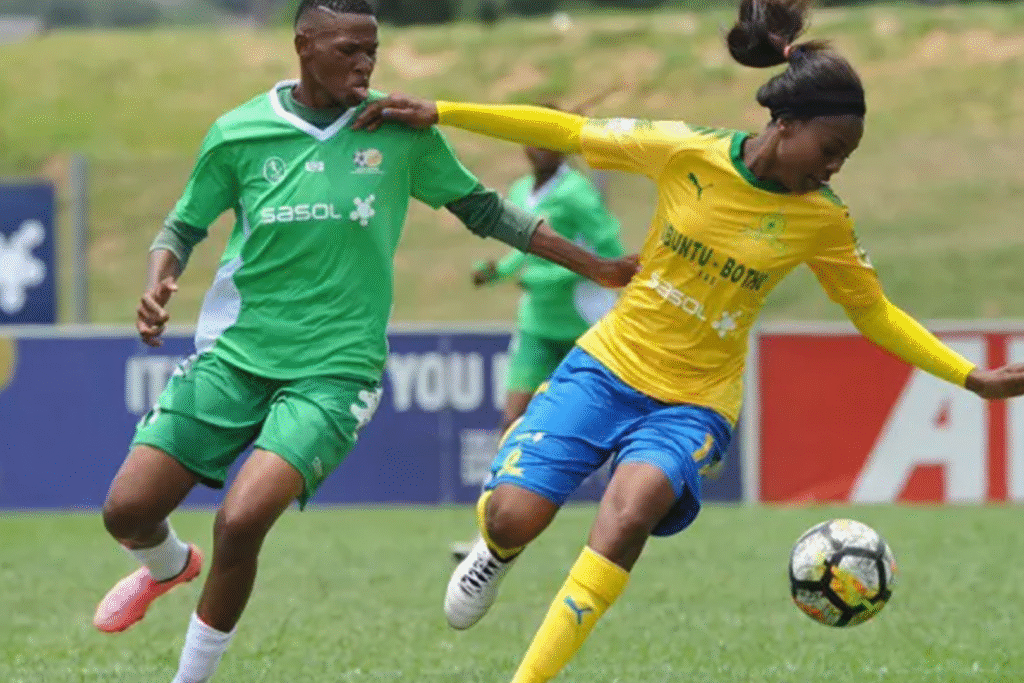
There is something intriguing and exciting about the rise of women’s football in South Africa. With more and more players now plying their trade in some of the world’s top leagues. Historically, South Africa has never had a professional women’s football league until last year. This coincided perfectly with the country’s annual celebration of Women’s Month — a celebration of women in society. While South Africa may not have had a professional women’s league, the country’s national setup has flourished. The national team competes at Under-17 and Under-20 levels. But the senior team — nicknamed “Banyana Banyana” — has represented South Africa in multiple tournaments. These include the COSAFA Women’s Championship Cup, African Women’s Cup of Nations and, more recently, a debut at the 2019 FIFA Women’s World Cup in France. They are currently ranked third in Africa and 53rd in the world according to FIFA. Despite unfair gender disparities, South Africa’s female footballers have attracted interest from professional leagues all over the world. Read More: Sarina Weigman is New Lionesses Head Coach In South Africa, the playing field is not level for young female footballers to rise up through development. But a new semi-professional league, established in 2009, gave women an opportunity to pursue a future in football. The Sasol league consists of 2800 footballers playing in 144 teams across the nine provinces in South Africa. It has made it easy for scouts and the national coaches to assess players. Embed from Getty Images The league has been steadfast in making sure that women’s football thrives in South Africa, despite very little corporate sponsorship. It was therefore humbling to witness the launch of the South African Football Association (SAFA) National Women’s League, which signaled a new era. The fully-professional league aims at the development and growth of the game for South Africa. There is still so much more that still needs to be done. But with 27 players now playing professionally in Europe and the United States, opportunities are aplenty. The rise of women’s football in South Africa continues to accelerate but there is still much more to be done. For now, the future looks bright.

Uncategorized

Log leaders Sitting Pretty in Sasol Women’s League

Ixias FC were big winners in the Sasol Women’s League this past weekend as they recorded an 11-nil victory over Napoli Ladies FC in Free State Group 1A at the CUT Welkom Ground on Sunday, 23 June, 2024. Masabata Mathapo scored a whopping six goals as Agnes Ramokatsa got a brace, and Ashley Staal, Makhala Makhanya, and Karabelo Tseko added a goal each. The massive win sees them remain on top of the log and have now increased their lead to five points over second-placed Metsimaholo Ladies FC, who were not in action this weekend. Kovsies were also banged a big victory in Group 1B as they got the better of Dimamarela FC 9-1, which sees them move to 22 points and level with Central University of Freestate, who occupy second place. There was a top-of-the-table clash in Mpumalanga Steam A, Sasol Juventus Ladies played to a 1-1 draw against with Storm Ladies. Both teams are now on 27 points, with their closest rivals Two Touch FC three points behind them. The Rockets maintained their place at the top as they secured a narrow 3-1 win over Likazi Ladies FC. Super Strikers Ladies are in second place on 30 points but were not in action over the weekend and now have the game in hand in Stream B. UCT is sitting pretty at the top of the standings in the Western Cape Stream A. Their 4-1 victory over Hout Bay United FC sees them on 22 points. Goal Hunters are in second place on 15 points, with a game in hand. They will have to hope HBU drop points if they want to get to the top of the standings in the coming matches. In Stream B top of the log Cape Town City Roses were not in action this week but second Magic Ladies FC were and managed to make some ground on the log leaders with their 3-0 win over RV United.

Uncategorized

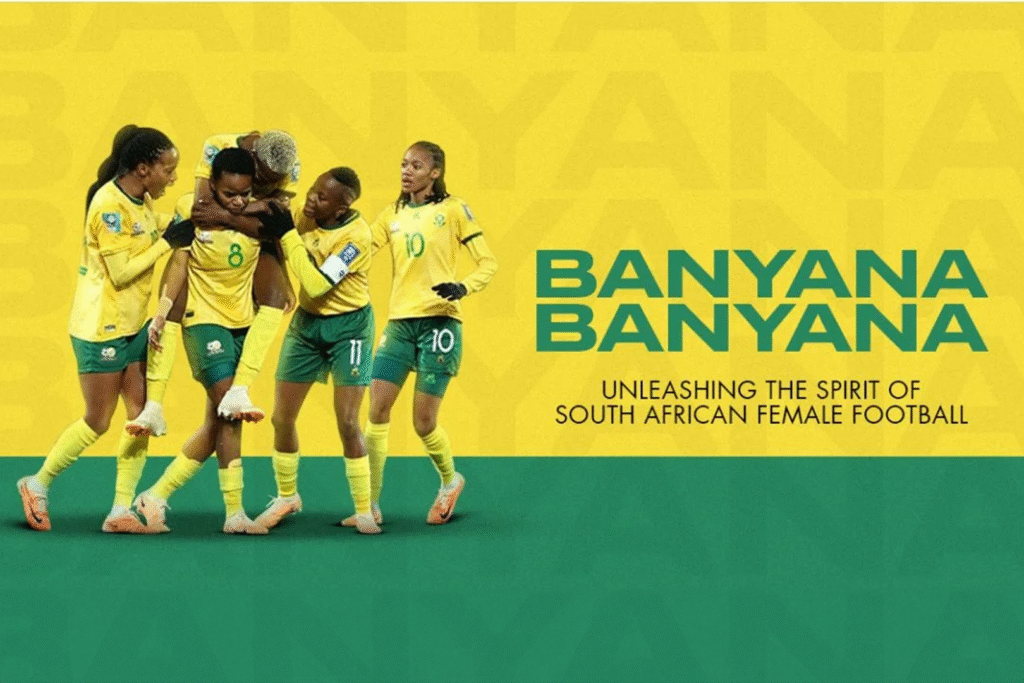
Banyana Banyana: Unleashing the Spirit of South African Female Soccer

Banyana Banyana: Unleashing the Spirit of South African Female Soccer The year is 2023, and a powerfully inspiring force has captured the nation of South Africa’s attention with their relentless passion, determination and pure grit. Banyana Banyana, our female soccer team, has emerged as a symbol of inspiration, unity, and hope, challenging stereotypes and breaking barriers, making waves on their journey to soccer history.   The Rise of Banyana Banyana Banyana Banyana, throughout the years, has made tremendous progress and showcased their unwavering determination to the sport, with every match played as a testament to their ability to overcome obstacles and surpass expectations. Their path to the global arena has been a challenging one. However, their unwavering determination and perseverance have brought them a long way.   Challenging Stereotypes The trailblazing Banyana Banyana has achieved remarkable success on and off the soccer field and has defied age-old stereotypes that have, for the longest time, undermined the abilities of female athletes, with their accomplishments in the sporting arena shattering glass ceilings and proving that women can excel in areas that men have traditionally dominated.   Inspiring the Next Generation The remarkable performance of Banyana Banyana on the global football stage fuels the aspirations of adolescent girls all over South Africa. The relentless pursuit of these female athletes as they chase their dreams and live their truth is an inspiring message that reaches beyond the soccer field and touches hearts. It ignites the imaginations of young women across South Africa.   Facing Adversity with Grit Having faced numerous challenges on their journey, Banyana Banyana has never given up, fighting each obstacle with strength and determination, beating the odds and silencing critics simultaneously. These female athletic stars remain resilient in the face of adversity, reflecting the warrior spirit of South Africa. As a proud nation, embracing the spirit of Ubuntu and showing unwavering support is precisely what our ladies need as they represent us on the world soccer stage.   Uniting the Nation South Africa is a diverse country, and the success of Banyana Banyana has the power to bring people together, regardless of their background. When the team wins, we all share in the pride, breaking down barriers of race, religion, and gender. Supporting Banyana Banyana helps us feel a sense of unity as a nation. The Road to Glory As they gear up for upcoming tournaments, our backing, as South Africans, is crucial. With our combined support, cheers of encouragement and pride in our team, we can help them succeed. Their unwavering commitment and our steadfast support are indeed a recipe for success.   Calling All South Africans: Let’s Stand United! The moment has arrived, fellow South Africans, to unite and support our beloved Banyana Banyana and to be a constant source of encouragement as we enthusiastically cheer from the stands, our living rooms, and even our backyards. Supporting and sharing our team’s achievements is crucial. Come on, SA, let’s unite, spread the word, and wish Banyana Banyana nothing but the best.   Banyana Banyana, embodies the essence of South Africa – overcoming obstacles and climbing hurdles to sporting greatness. These ladies serve as a source of inspiration and motivation as they lead the women of our country with pride.   As a nation, rallying behind our female soccer team fosters the spirit of Ubuntu, which we are so proud of. It commemorates our greatness as a people of beautiful diversity, on and off the soccer court!  

Uncategorized

The ever-improving African Women’s Champions League is an instrumental tool for soccer development

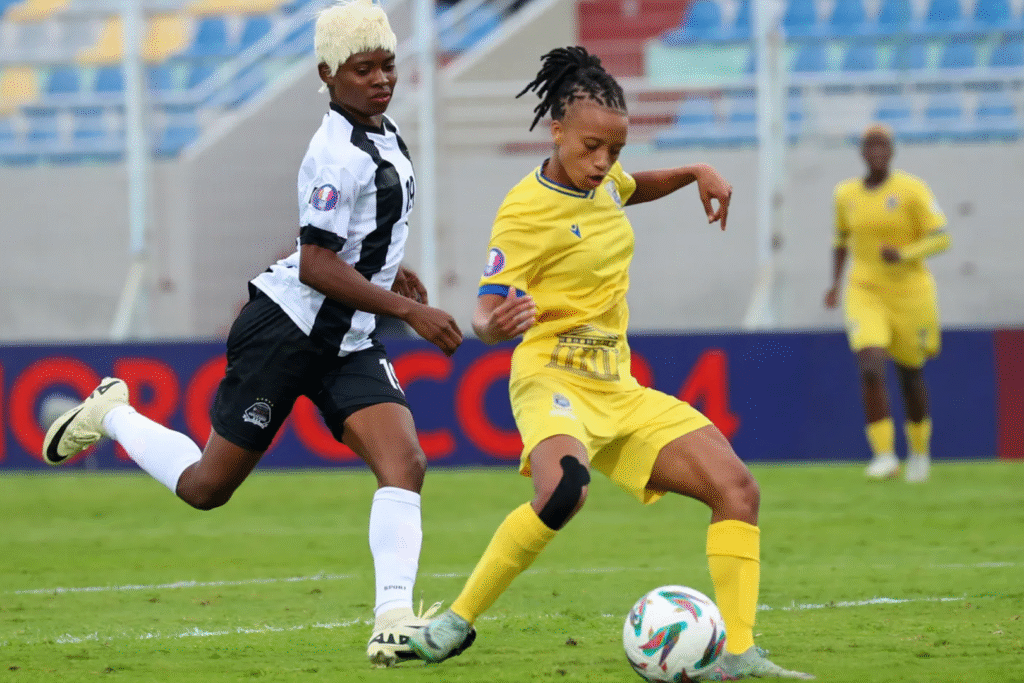
It’s no secret that women’s sports, particularly from the perspective of team sports, is still trying to catch up to the structures and benefits enjoyed by the men in equivalent codes – from development pipelines, to opportunities for growth at those young and crucial ages, even via factors such as sponsorship and coverage, which ultimately play a pivotal part in the financial compensation of the athletes. Global standards  In Europe, huge strides have been made over the past few decades. One example is the high-quality soccer regularly on display in the women’s English top-flight, the Super League.   And the US, which has long been the benchmark for quality women’s soccer, has generally continued on an upward trajectory, while countries such as Australia and Colombia have grown in stature, as shown by the displays at the 2023 Fifa World Cup. Yet, in Africa, the chasm between men and women remains jarring. A number of women soccer players based in Africa – despite investing a significant amount of time and effort into their craft – usually have nothing to show for it financially. In fact, sometimes these talented athletes incur financial loss just to be able to play their beloved sport. Banyana Banyana coach Desiree Ellis has regularly lamented the fact that most of the players she has to choose from in the local Hollywoodbets Super League usually have full-time occupations to sustain themselves and their families as they pursue their passion of playing the sport. Therefore some have struggled when called into the national team, despite shining at club level. Competitions such as the African Women’s Champions League are integral in helping to foster change. Sibulele Holweni of the University of the Western Cape is challenged by Ladifatou Adjidja Ngambe of TP Mazembe during a CAF Women’s Champions League match at Ben M’Hamed El Abdi Stadium in El Jadida, Morocco, on 9 November 2024. (Photo: ©BackpagePix) Battle of the best First played in 2021, the Champions League marked a significant and deliberate step by the Patrice Motsepe-headed Confederation of African Football (Caf) to grow women’s soccer on the continent.   Before his ascension to Caf president, the club’s owner, Motsepe, had turned Sundowns into one of the most well-run women’s sports teams in Africa. These days it is run by Motsepe’s son, Tlhopie. Under his leadership Sundowns have won two of the past three editions of Africa’s premier women’s club competition. In 2024, they are aiming to make it three out four editions by defending the crown they clinched a year ago. Mamelodi Sundowns after winning the 2023 CAF Women’s Champions League final against Sporting Club Casablanca at Amadou Gon Coulibaly Stadium in Korhogo, Ivory Coast, on 19 November 2023. (Photo: ©Samuel Shivambu / BackpagePix) It won’t be easy, as Sundowns found out after falling to debutants Masar in their opening game this year. The Egyptians dug deep to beat Banyana Ba Style 1-0. “The level of competition has improved drastically in the last two editions. Teams have become more tactically aware, and there’s been a huge progress,” Sundowns coach Jerry Tshabalala told Caf’s media department. “More clubs are investing in their women’s teams. We have seen teams like Simba Queens and TP Mazembe, which has raised the overall quality of play. The tournament is more competitive than ever, and this demands that we keep evolving,” Tshabalala added.   Sundowns, who are grouped with Nigeria’s Edo Queens and Ethiopian side CBE in addition to Masar, are one of two South African teams at the Morocco-hosted tournament. Masandawana qualified automatically as defending champions, which left a gap for another southern African side to qualify. This honour went to fellow South Africans, the University of the Western Cape. Jerry Tshabalala, coach of Mamelodi Sundowns Ladies, reacts during their CAF Women’s Champions League final against Sporting Club Casablanca in Korhogo, Ivory Coast, on 19 November 2023. (Photo: ©Samuel Shivambu / BackpagePix) “It’s a huge milestone for women’s soccer in South Africa to have two clubs in the CAF Women’s Champions League this year. It shows that our domestic league is growing in strength and that we are producing talent capable of competing at the highest level in Africa,” Tshabalala said. “This can only benefit the overall development of the women’s game in South Africa and inspire more investment and growth,” he added. In another milestone, the prize money for the competition has grown substantially in 2024. The overall pool to be shared among the eight participating teams is $2,350,000 (about R43-million), an increase of 52% from 2023. Each club is guaranteed at least $150,000 (R2.7-million), while the winners walk away with $600,000 (R11-million).   The fact that the best African men’s club will pocket almost four times that shows the gulf between the two sports. Yet, Caf is clearly heading in the right direction and these strides will eventually trickle down to the local level of the involved clubs.

Uncategorized

How the Mzansi Equality League is changing the game for girls’ football in South Africa

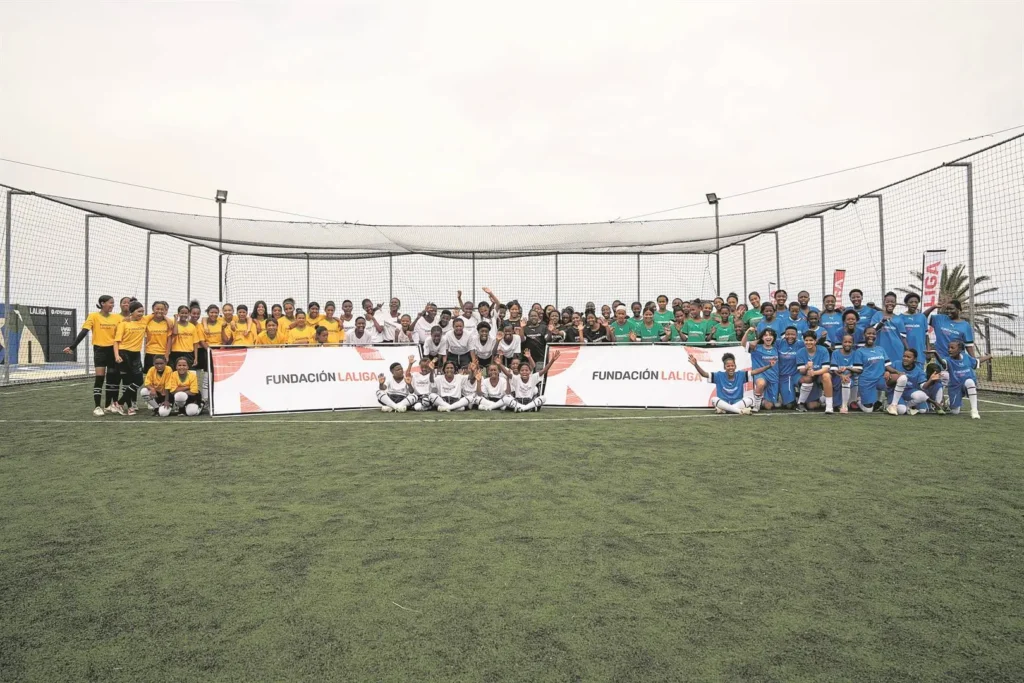
Empowering girls by promoting diversity and inclusivity in sport. That is the key focus of the Mzansi Equality League, a unique football tournament designed to provide a safe and empowering space for young girls to play organised football. The tournament, led by LALIGA South Africa and FUNDACIÓN LALIGA, is currently in South Africa for the first time. It kicked off at the Fives Futbol Court in Clifton on Saturday 12 October, and it will run for six weeks. Taking part currently is five teams from various communities across Cape Town. Each team consists of 20 girls aged between 13 to 16. Tresor Penku, managing director of LALIGA Africa, says the league aims to address socio-economic challenges. “By providing young girls with access to opportunities in football, the league aims to keep them engaged in sports for longer. This initiative gets them out of their comfort zone. It is designed to build their confidence and empower them, fostering personal growth and development.” He said the game goes way beyond just sports. “Participants are provided with an opportunity to develop valuable life skills while building meaningful connections within their communities. By focusing on both sports and social development, the league aims to empower young women and promote a wider positive change in their lives. Penku says bringing the league to South Africa will help promote women’s sports. The league was originally launched as La Ligue d’Égalité in Cameroon and then expanded to Kenya. “Bringing the league here is important because it can help promote gender equality, and build a good foundation for women’s football, although it is more focused on inculcating life and leadership skills to young girls. “Being in South Africa reflects our commitment to empowering girls across the continent.” According to Penku, LALIGA has seen the positive results the game has on the girls and how it improves their academics. “In Cameroon, where we first launched this initiative together with our partner Petrichor, an NGO focused on human rights and community development, we’ve seen that the girls taking part tend to also do better in school and other areas of life. “Participating in the league allows girls to maximise their footballing potential while helping them build their leadership abilities. It provides a safe environment for practising and refining their skills, helping them gain confidence, but more importantly it has a positive effect beyond the pitch.” Platform for women Penku said the league promotes women’s sports by providing a platform for female footballers to showcase their talent and compete at various levels. “By highlighting the talents of female footballers, the league challenges stereotypes and fosters a culture of inclusivity, inspiring young girls to get involved. The league advocates for equal opportunities in sports and contributes to the overall growth of women’s sports at all levels.” One of the soccer teams taking part is Oasis from an organisation called the Oasis Linking Lives Together based in Schaapkraal. Mishalan Davids, head coach for Oasis, says thanks to Laliga the girls are now getting exposure to soccer. “Girls don’t often get the opportunity to play soccer because in society it is seen as a boy sport. It’s a privilege for us to be one of the first teams to partake in this league. We usually hear about Laliga on TV but now we are part of it.” She called on more organisations to support women’s sports. “Our girls don’t get much exposure to the game of football. For them it’s not just about football, it’s an escape from their environment. When you are on the field your mind is focussed on nothing but the game.” According to Penku, cultivating future leaders is crucial. “We are equipping the girls with essential skills to become leaders in their communities through educational courses and training offered that will further support their personal growth, providing the kind of knowledge and experiences that promote community engagement as well as encouraging them to become active, positive contributors to society.”

Uncategorized

Women and gender in South African soccer: a brief history

Cynthia Fabrizio Pelak* Department of Sociology, New Mexico State University, Las Cruces, NM, USA cpelak@nmsu.edu Dr Cynthia FabrizioPelak 000000January 2010 1/2 11 Taylor & Francis 2010 Original Article 1466-0970 (print)/1743-9590 (online) Soccer and Society 10.1080/14660970903331342 FSAS_A_433312.sgm Taylor and Francis This essay traces the history of South African women’s participation in competitive soccer from 1970 to the present and analyses power relations, namely race, gender and class, within the sport. Three distinct periods are identified: (1) emergence and development years from 1970 to 1990; (2) growth and transition years from 1991 to 2000; and (3) institutionalization years from 2001 to the present. This socio-historical analysis is based on fieldwork in South Africa and relies on qualitative interviews, participant observations and archival documentation. Special attention is given to the shifting racial demographics of women footballers, the influence of feminism and democratization in South Africa on increasing the numbers of girls and women in this masculine flagship sport, globalization of ‘women’s soccer’ and the organizational development in the sport at the local and national levels. Contributions of key administrators and leaders as well as players are briefly discussed. Introduction One of the ubiquitous sights during the late afternoon in both rural and urban communities of South Africa is that of young boys playing soccer on makeshift or well-worn soccer pitches. While young boys have carved out space for their physical and social pleasure during the late afternoons, young girls spend their last hours of daylight hauling water and making preparations for the evening meal. South African Cheryl Roberts, a former elite athlete and sports advocate, argues that the gender division of household labour, which burdens women and privileges men, is a critical factor in limiting South African women’s access to sports.1 For the vast majority of women in South Africa, especially those in rural areas, participation in competitive sport is irrelevant to the needs of their daily lives.2 This is not to suggest, however, that South African women of diverse regional, economic and ethnic backgrounds have not participated in competitive sport nor continue to forge new sporting identities and opportunities. Given the historical constraints on women in sport, South African women’s participation in ‘female-typed’ sports such as netball is far more acceptable than their participation in ‘male-typed’ sports such as soccer. Soccer in South Africa, like that in much of the world, has been explicitly gendered as a male-only sport.3 The historical exclusion of women in South African soccer was instituted at the time British colonialists first introduced the sport to the country in the nineteenth century. The centrality of soccer to nation building and citizenship in South Africa over the past century, particularly for Blacks, has relied on and been deeply shaped by the fact *Email: cpelak@nmsu.edu ISSN 1466-0970 print/ISSN 1743-9590 online © 2010 Taylor & Francis DOI: 10.1080/14660970903331342 http://www.informaworld.com64 C.F. Pelak it is constructed as a masculine flagship sport. As such, soccer serves as an ideological and material cornerstone for the maintenance of men’s dominance (physically, economically, and socially) over women in South Africa. The importance of soccer in Black popular culture and the sex-segregated nature of the game have led to its construction as a masculine flagship sport.4 Unlike racial segregation, sex segregation in soccer has not been collectively challenged until recently. Although individual women and girls have undoubtedly participated in all-male teams prior to the late 1960s, it was not until then that South African women collectively challenged the gendered boundaries within the sport and formed their own teams. This essay traces the history of South African women’s participation in competitive soccer from 1970 to the present. This socio-historical analysis is based on data that were gathered as part of a sociological study of race, gender, sport and nation-building in post-apartheid South Africa.5 The author conducted fieldwork in South Africa during 1999, 2000 and 2003. The data collected include: semi-structured interviews and survey data with athletes participating in the national team and the Western Province women’s soccer league, semi-structured interviews with regional and national football administrators, and archival documents including newspaper articles, tournament programmes, organizational correspondence and policy documents. Direct observation of the women’s league play was also carried out in 2000. The Western Province was chosen as the site for this observation because it was widely considered at the time the most developed region for women’s soccer in South Africa. I organize the essay around three periods in South African ‘women’s soccer’.6 These include: (1) the emergence and development period between 1970s and 1990, (2) the growth and transition period between 1991 and 2000, and (3) the institutionalization period from 2000 to the present. This essay does not claim to offer a comprehensive history of women’s participation in soccer in South Africa; this would require additional research. Rather, this analysis aims to be an introduction of the history of women’s participation in soccer. Emergence and development years: 1970s to 1990 The deep fissures of race and class in South Africa has meant that women in soccer do not necessarily share the same experiences or form a homogenous grouping. 7 South African women’s access to opportunities in organized soccer has been largely determined by an individual’s racial and class location in society, as well as the shifting political opportunities for women to collectively challenge race, gender, and class hierarchies. In South Africa, white women of middle-class backgrounds were among the first to join organized soccer in the late 1960s and early 1970s.8 While some Black women played irregularly in the 1960s, Coloured and African women started to play organized football in the late 1970s and early 1980s. During these years, the harsh material inequalities experienced by Black women under apartheid rule meant that very few of them enjoyed opportunities to participate in sport.9 White middle-class women in urban areas, for example, had much more access to sporting opportunities than poor African, Coloured and Asian women living in rural (or urban) settings.10 With the dismantling of apartheid during the 1990s Black women gained greater access to the public sphere

Uncategorized

Thembi Kgatlana: Overcoming stereotypes and captivating football fans worldwide

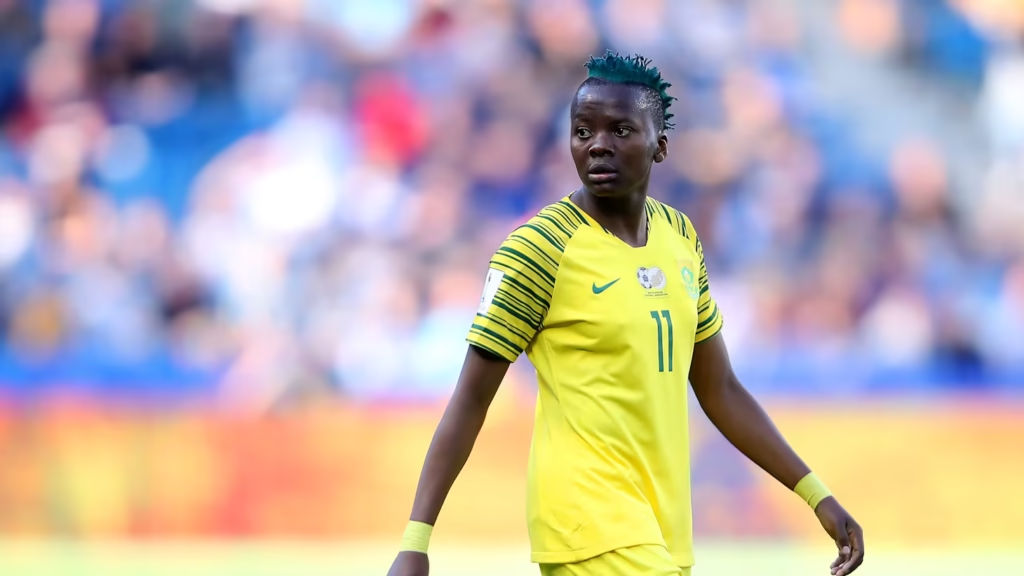
Thembi Kgatlana showed an interest in football from an early age but was forced to play with the boys due to a lack of opportunities in her community for girls interested in taking up the sport. Football eventually lured her away from township life in Mohlakeng with a scholarship at the SAFA Girls Soccer Academy of TuksSport High School Pretoria which paved the way to an illustrious international career. But Kgatlana first had to battle through gender stereotypes in her own community as her peers questioned her choice to play a sport they believed was the preserve of young men. Kgatlana started playing football at eight years old joining the local boys’ team before she was identified as a potential talent. The young Kgatlana’s love for football attracted condemnation from the community while her parents were concerned about her safety. “There was a lot of tension with me being a footballer at that age. You can imagine an eight-year-old going out to play football with boys. There is a lot you can think of as a parent that can happen,” Kgatlana told Radio 702. “I can understand the frustration my parents had because I was still very young at that point, I was the only girl playing with the boys. There was a lot of fighting, and I was very rebellious because all I wanted to do was to play.”

Uncategorized

Restored Hope for Young Female Soccer Players

Rays of Hope, a foundation based in Germany which has supported the work of Lesedi la Batho for several years, have brought new life and revival to the Lesedi Strikers Ladies Football Team in Mabopane, South Africa. The semi-professional team, coached by Nhlanhla Maseko – CAF A licensed coach and former Banyana Banyana centre forward, was founded in 2011 to improve the soccer skills of talented young black female soccer players while proactively teaching them essential life skills. In recent years, the program slowed due to a lack of funding, however in January 2020, Rays of Hope revived this story of hope and a future for young black female soccer players in Mabopane by generously sponsoring the program, and our ladies would like to say THANK YOU! We, the Lesedi Striker’s ladies football team, would like to thank Rays of Hope for sponsoring our team. We are incredibly grateful for your support and generosity! Your support will open many new opportunities for us as a team, it will help us develop our skills and grow as individuals. Furthermore, your moral support is a great motivational tool for us as a team! Now we are enabled to participate in highly distinguished tournaments with confidence. We intend to use this opportunity to our full potential and become the best we can, we will represent with pride the name of our centre Lesedi La Batho and our sponsor Rays of Hope who have given us this opportunity to have hope and dreams again. We thank you! – Nhlanhla Maseko A.K.A. Coach Fire, Lesedi Strikers Coach From us Lesedi Strikers we would like to thank you, Rays of Hope, for making it possible for us to fulfill our desires and dreams as a team. Your help and intervention has brought a huge change to our team, we can now be seen as a properly functioning team in Mabopane and even register ourselves at SAFA House to play League games. I am the striker for the Lesedi Strikers, and every single goal I shoot is dedicated to Rays of Hope who have brought me and the team a lot of hope in our football future and career. ​A very huge thank you to you RAYS OF HOPE – we as Lesedi Strikers appreciate everything you have done for us! – Tebogo Mokoena, Lesedi Strikers Striker Dear Rays of Hope, I hereby express my gratitude to you, for sponsoring our team Lesedi Strikers FC! It’s a great honour as we were experiencing financial difficulties over the past years and the team was slowly starting to fall apart. The good news of your sponsorship has brought us all back together as a team and has given us hope and a fresh new start. Being part of the Lesedi Strikers keeps us away from bad company and things we could have become involved in due to peer pressure, such as drugs and alcohol abuse – which is a major problem amongst the youth in Mabopane. We really appreciate your sponsorship and the support you have offered our team. ​I thank you, Rays of Hope! – Tshepang Thibidi, Lesedi Strikers Left Wing Thank you for sponsoring our football club! Your support has opened many opportunities for us as young black South African women in football. Young women who previously didn’t have a proper platform to shine and show case their skills because of the many social ills we face in our community, including teenage pregnancy and high drug and alcohol usage, can now aspire for more. Our team can participate in tournaments that are highly respected in the soccer world, broadening our discipline and characteristics on and off the field. Without your support, we wouldn’t have been able to reach our goals. ​Thank you RAYS OF HOPE for your generous support towards our team! – Oamogetswe Makgopela, Lesedi Strikers Team Member

Uncategorized

The Soccer Grannies of South Africa

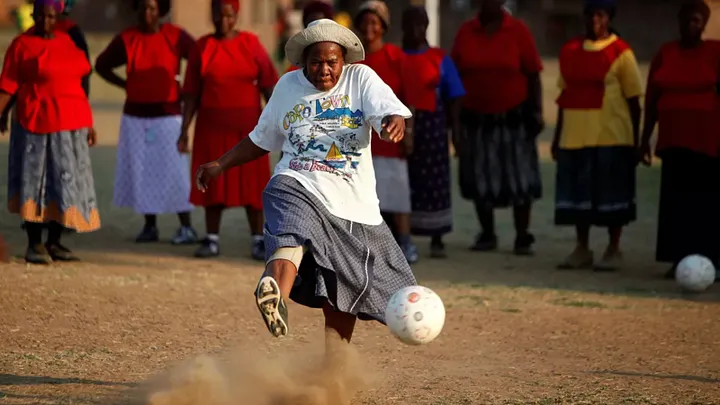
Mentors, advisors, and local leaders. Culturally portrayed as figures of wisdom and tradition, custodians of culture and collective knowledge. Historically, female elders around the world have stepped up to affect mindsets and social norms. In the first story of this series, we see how elder women are stepping up in non-Western cultures, primarily in West Africa, and we learn from Ashoka Fellow Dr. Judi Aubel about the importance of involving these women in catalyzing change. In this next story, we shift to South Africa and see how elder women are taking care of not only their communities, but also themselves as a sisterhood, taking back control of their bodies and lives. Ashoka Fellow Beka Ntsanwisi and the Gogos — Exploring Livelihoods Beka is enabling her fellow female elders in the rural areas of South Africa to master their responsibilities as the villages’ pillars — to take better care of themselves so they can take better care of their communities. Younger people in South Africa often migrate to the cities for employment, leaving their families in the care of the grandmothers. With significant responsibilities and without the needed societal support, these women — commonly called “Gogos” in the Sub-Saharan region — become physically, emotionally, and financially stressed. In 2003, Beka found herself spending time at the hospital for medical treatments, where she met many older women with ailments like hypertension, diabetes, arthritis, and rheumatism. “When I go to hospital, you see that there are many women there. Why women?” In speaking with these women, Beka realized that their illnesses were often stress- and lifestyle-related. The HIV and AIDS epidemic continues to leave some children orphaned and in their Gogo’s care, although this issue is improving thanks to one of the world’s largest HIV treatment programs. In other households, the mother might be on her own and in need of the Gogo’s intensive help. “They only get 1,000, maybe 1,200 rands [85 U.S. dollars] to feed more than maybe twelve or eight grandchildren. And it’s stressful to them.” Healing through Community Exercise and Games Press enter or click to view image in full size Photo courtesy of Beka Ntsanwisi Beka had a brilliantly simple idea to help the Gogos take back their physical and mental strength and consequently embrace their role more effectively as the backbone of the home and community: “One day, I decided we need to do aerobics, take the Grannies to do aerobics.” Beka realized that exercise has healing effects on the body and mind that medical treatment does not: “I thought by exercising, it will take out all the chemicals that are in me.” While gaining back her own fitness, Beka convinced a few of the Gogos to join her in exercising. Little by little, the simple workouts turned into exciting games. Beka remembers fondly, “We went to the playing ground only to find that there were boys playing soccer down there. They passed the ball to us, so one Granny, I said, ‘Granny, run!’ and that woman decided to kick the ball. But it couldn’t go far, and the boys were laughing. She tried to run again, kick the ball. It was just going to us — the other Granny kick it, and the other one kick it, and we were laughing. The next day, they called me and said, ‘We need to do this again, it’s nice!’ And that’s how we started.” Photo courtesy of Beka Ntsanwisi From Games to Powerful Transformations The organization Vakhegula (“Grannies”) was born, becoming a nonprofit in 2006. Vakhegula now reaches the Gogos in more than 40 communities in Limpopo, a northeastern province in South Africa.

Scroll to Top